





Senegal: the ceebu jën – thiéboudiène – listed as a UNESCO World Heritage Site!
Publish date: 07 February 2022 / Food
Confirel knows it too well: well-being is nourished by good cuisine. This is why we want to share the joy of the Group’s Senegalese partners to see a national dish of their country named thiéboudiène inscribed by UNESCO, at the end of last year, on the list of the intangible heritage of humanity.
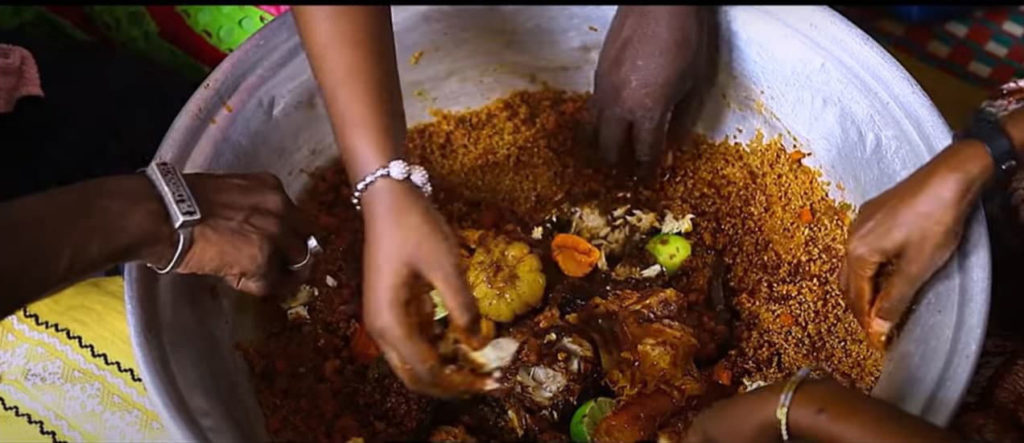
Called ceebu jën in Wolof, it is a dish that has its origins in the fishing communities of the island of Saint-Louis in Senegal, writes Unesco on its site. “Although recipes vary from one region to the next, the dish is typically made with fish steak, broken rice, dried fish, mollusc and seasonal vegetables such as onions, parsley, garlic, chilli pepper, tomatoes, carrots, eggplant, white cabbage, cassava, sweet potato, okra and bay leaf. The quality of the fish and the choice of vegetables are determined by the importance of the event or the degree of affection one has for the guest.”
The recipe and techniques are traditionally passed down from mother to daughter. In most families, ceebu jën is eaten with the hands, although spoons or forks are usually used in restaurants.
“The dish is also tied to specific cultural practices. For instance, it is forbidden to sit with a raised knee, the bowl must be held with the left hand, and grains of rice must not be dropped when eating. The ceebu jën dish and associated practices are viewed as an affirmation of Senegalese identity.”
Because he has won the favors of taste buds all over Africa, it is only fair that his Senegalese origin be recognized. It’s done!
Since we are talking about culinary marvels, note that Cambodia, for its part, filed in 2019 an application for inclusion on this same list of num banh chok, rice noodles, traditionally served with somlor kari, a Khmer curry, or somlor proher. The somlor proher is a soup whose main ingredient is mashed fish with lemongrass and other Cambodian herbs and spices.